Events

Upcom­ing events

Bro­ker­Star User Day 2025

date

Time

Loca­tion

Link

Pro­gramme

Reg­is­tra­tion

Thurs­day, 28 August 2025

11–16.30 hrs

iCi­ty, Reinach BL

https://www.wmc.ch/userday-2025/

Pro­gramme 2025

https://www.wmc.ch/web/anmeldung-dialog

Insur­ance Bro­ker Forum 2025

date

Time

Loca­tion

Link

Pro­gramme

Tues­day, 01 July 2025

08:15 — 16:30 h

Got­tlieb Dut­tweil­er Insti­tute — Rüschlikon

www.fuw-forum.ch

see web­site

IG B2B — Bro­ker­Con­vent 2025 

date

Loca­tion

Link

Pro­gramme

Wednes­day, 22 Octo­ber 2025

Bern­EX­PO

www.igb2b.ch

see web­site

Past events

Forum des Courtiers 2025

date

Time

Loca­tion

Link

Pro­gramme

Tues­day, 27 May 2025

08:00 — 16:00 h

Swiss Tech Con­ven­tion Cen­tre Ecublens

https://www.forum-des-courtiers.ch/

Fly­er Forum ACA 2025

20.11.2024 Swiss Insur­ance Inno­va­tion Award

date

Time

Loca­tion

Pro­gramme

Reg­is­tra­tion

Wednes­day, 20 Novem­ber 2024

in the evening

High-end event loca­tion AURA, Zurich

Pro­gramme

Tick­ets

29.08.2024 Bro­ker Secu­ri­ty Forum

date

Time

Loca­tion

Pro­gramme

Reg­is­tra­tion

Thurs­day 29. August 2024

11:00 — 16:30 h

Inno­va­tion Hub, München­stein BL

Pro­gramme 

Please until 19 August 2024 

20.06.2024 Bro­ker­Star User­day ’24

date

Time

Loca­tion

Link

Pro­gramme

Thurs­day 20 June 2024

13:30 — 17:00 h

WMC IT Solu­tions AG, virtual

Video record­ing

down­load

29.05.2024 Insur­ance bro­ker 24

date

Time

Loca­tion

Link

Pro­gramme

Wednes­day 29 May 2024

08:15 — 16:30 h

Got­tlieb Dut­tweil­er Insti­tute — Rüschlikon

fuw-forum.ch/insurance-broker

see web­site

30.05.2024 Forum des Courtiers

date

Time

Loca­tion

Link

Pro­gramme

Thurs­day 30 May 2024

08:00 — 16:00 h

Swiss Tech Con­ven­tion Cen­tre Ecublens

forum-des-courtiers.ch/invitation

voir site internet

Reporting in BrokerStar

The term report­ing cov­ers all types of analy­ses, whether as a list or a graph­ic and regard­less of the for­mat.

In the fol­low­ing arti­cle, we explain how the report­ing sys­tem in Bro­ker­Star is struc­tured. We look at tech­ni­cal and licence-relat­ed aspects and show you the var­i­ous options.

1. the Bro­ker­Star report­ing sys­tem
2. stan­dard, indi­vid­ual and ad hoc reports
3. file for­mats
4. ser­vices


1. the Bro­ker­Star report­ing system

Bro­ker­Star uses a so-called Busi­ness Intel­li­gence (BI) tool, TIBCO Jasper­soft. This wide­ly used tech­nol­o­gy allows all infor­ma­tion from the data­base to be select­ed and out­put. Data can be rearranged and put into rela­tion as required. The data can also be com­bined with infor­ma­tion from oth­er exter­nal data sources.
 
2. stan­dard, indi­vid­ual and ad hoc reports
Bro­ker­Star dis­tin­guish­es between dif­fer­ent cat­e­gories from a licens­ing perspective:
Stan­dard reports are sta­t­ic analy­ses, i.e. dif­fer­ent lists that are deliv­ered to all cus­tomers as stan­dard in Bro­ker­Star as part of the scope of deliv­ery. These eval­u­a­tions can be graph­i­cal­ly cus­tomised for the bro­ker from 2022.
Indi­vid­ual reports are cus­tomised analy­ses that are pre­pared specif­i­cal­ly for the bro­ker at the customer’s request. They are not sup­plied as stan­dard to oth­er bro­kers and are sub­ject to a charge. This also includes dynam­ic reports.
Ad Hoc Reports are analy­ses that are usu­al­ly cre­at­ed by the bro­ker itself. This requires a cer­tain amount of exper­tise com­pa­ra­ble to the cre­ation of more com­plex Excel tables. Of course, ad hoc reports can also be cre­at­ed by WMC. Anoth­er ser­vice is the trans­fer of knowl­edge, e.g. in the form of train­ing. As TIBCO Jasper­soft is a stan­dard prod­uct, there are also var­i­ous train­ing options avail­able on the Inter­net or from third-par­ty providers.
 
3. file formats

Reports from Bro­ker­Star can be out­put in all avail­able file for­mats. The most impor­tant of these include PDF/A (legal­ly archiv­able, unal­ter­able PDF), Excel, Word, Pow­er­Point or HTML. The stan­dard reports are usu­al­ly out­put as PDFs. How­ev­er, there are also gener­ic Excel exports for fur­ther pro­cess­ing. For out­put as Word, there is the option of auto­mat­i­cal­ly con­vert­ing the PDF into a Word file.

Tech­ni­cal­ly speak­ing, TIBCO Jasper­soft offers five dif­fer­ent levels:
- Lev­el 1: Sta­t­ic reports using an embed­ded report library
- Lev­el 2: Guid­ed and dynam­ic reports with sim­ple inter­ac­tiv­i­ty, plan­ning, secu­ri­ty and auto­mat­ic distribution.
- Lev­el 3: High­ly inter­ac­tive reports and dash­boards using the report server
- Lev­el 4: Ad-hoc reports for self-ser­vice via a BI server
- Lev­el 5: Self-ser­vice data explo­ration against a data mart using a BI server
 

4. ser­vices
Includ­ed in the sub­scrip­tion:
- All stan­dard reports

Addi­tion­al ser­vices sub­ject to a charge
- Cus­tomised adap­ta­tions to stan­dard reports -> Indi­vid­ual reports
- Indi­vid­ual reports. Dash­boards, cock­pits, Ad Hoc Reports
- Train­ing

Licences
- All reports from lev­el 2 require the licens­ing of the MIS module

Jaspersoft 

Analysis with BI 

Five Levels 

WMC customer portal

WMC cus­tomer por­tal
Instruc­tions

Def­i­n­i­tion of
The WMC cus­tomer por­tal offers you as a cus­tomer cen­tralised, secure and per­son­alised access to var­i­ous ser­vices and infor­ma­tion. You can use the por­tal to access your per­son­al data, car­ry out trans­ac­tions, make enquiries and much more. The indi­vid­ual func­tions are also tai­lored to the autho­ri­sa­tions of the respec­tive users. This means that sev­er­al peo­ple per com­pa­ny (cus­tomer) can have the same or dif­fer­ent authorisations.

Ben­e­fit
The WMC cus­tomer por­tal has the Bro­ker­Web as a role mod­el and aims to make cus­tomer inter­ac­tions more effi­cient, cus­tomer-friend­ly and com­pli­ant with data pro­tec­tion reg­u­la­tions. Cus­tomer por­tals are now regard­ed as an impor­tant part of the cus­tomer jour­ney, as they pro­vide con­stant and direct access to com­pa­ny resources.

Func­tions
You can access the WMC cus­tomer por­tal via the WMC web­site with login — pass­word and mul­ti-fac­tor authen­ti­ca­tion. This cre­ates a secure and data pro­tec­tion-com­pli­ant con­nec­tion to WMC, just as you know it from e‑banking. Infor­ma­tion and doc­u­ments are avail­able to you in the por­tal. You can cre­ate access for sev­er­al peo­ple with dif­fer­ent autho­ri­sa­tions. You can find your con­tract doc­u­ments, the cur­rent sub­scrip­tion and all invoic­es. You can also use the por­tal to sub­mit enquiries such as new or chang­ing employ­ees, orders for addi­tion­al mod­ules. The func­tions are still being expand­ed. We are hap­py to receive suggestions.

For error mes­sages and tech­ni­cal enquiries, please use the tick­et sys­tem in BrokerStar.

The reg­is­tra­tion
You will receive an e‑mail with the link to the por­tal reg­is­tra­tion. Please take the fol­low­ing steps, to be able to use the por­tal afterwards.

  1. Down­load an authen­ti­ca­tor on your mobile phone if you have not already done so
    (WMC rec­om­mends the apps from Microsoft or Google)
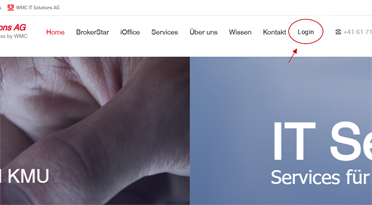
  2. Use the link «Login» at www.wmc.ch to log in
  3. Scan the QR code with the Authen­ti­ca­tor app
  4. Change your pass­word for your security

You can now use the por­tal at any time. As soon as new doc­u­ments are added to the por­tal, you will receive a noti­fi­ca­tion e‑mail.

Authen­ti­ca­tor Down­load at:

Login to the cus­tomer portal:

Authen­ti­ca­tor Down­load at:

Request access to the portal


    Do you have any ques­tions?
    We are here for you.


    Phone: +41 61 716 11 15
    E‑mail: info@wmc.ch


    Do you need access for more peo­ple?
    Then please use the form on the left.

    Brokerweb V‑3

    A Cus­tomer por­tal for busi­ness and private

    Send pre­mi­um invoic­es and oth­er doc­u­ments eas­i­ly, elec­tron­i­cal­ly and securely.

    Bro­ker­web is a cus­tomer por­tal sim­i­lar to e‑banking. It pro­vides cus­tomers with all the lat­est impor­tant infor­ma­tion at all times, deliv­ers doc­u­ments and offers var­i­ous ser­vices such as enquiries, claims noti­fi­ca­tions and more. In con­trast to e‑mail cor­re­spon­dence, the exchange of data and doc­u­ments is secure and com­plies with cur­rent data pro­tec­tion regulations.

    In addi­tion to these tech­ni­cal fea­tures, the indi­vid­u­al­i­ty of the bro­ker and thus cus­tomer loy­al­ty has also been increased. To this end, Bro­ker­Web can be con­fig­ured at var­i­ous lev­els. Rapid con­tact with the respon­si­ble advi­sor is just as impor­tant as sim­ple han­dling for the cus­tomer. Var­i­ous clients can be mapped in Bro­ker­Web by WMC. In addi­tion, dif­fer­ent rights can be assigned to dif­fer­ent peo­ple. With chat func­tion since spring 2024.

    The por­tal is respon­sive and can there­fore be used on all end devices such as PC, Mac, tablet or smart­phone. Its ease of use makes it a prac­ti­cal tool for both busi­ness and pri­vate cus­tomers when it comes to insur­ance and bro­ker ser­vices. It is also very impor­tant that the require­ments of the new Data Pro­tec­tion Act (nDSG), which came into force on 1 Sep­tem­ber 2023, are met.

    Login: demo-de
    Pass­word: demo-de


    Sam­ple pages  (click to enlarge)

    Fea­tures

    Data pro­tec­tion
    nDSG require­ments are fulfilled.

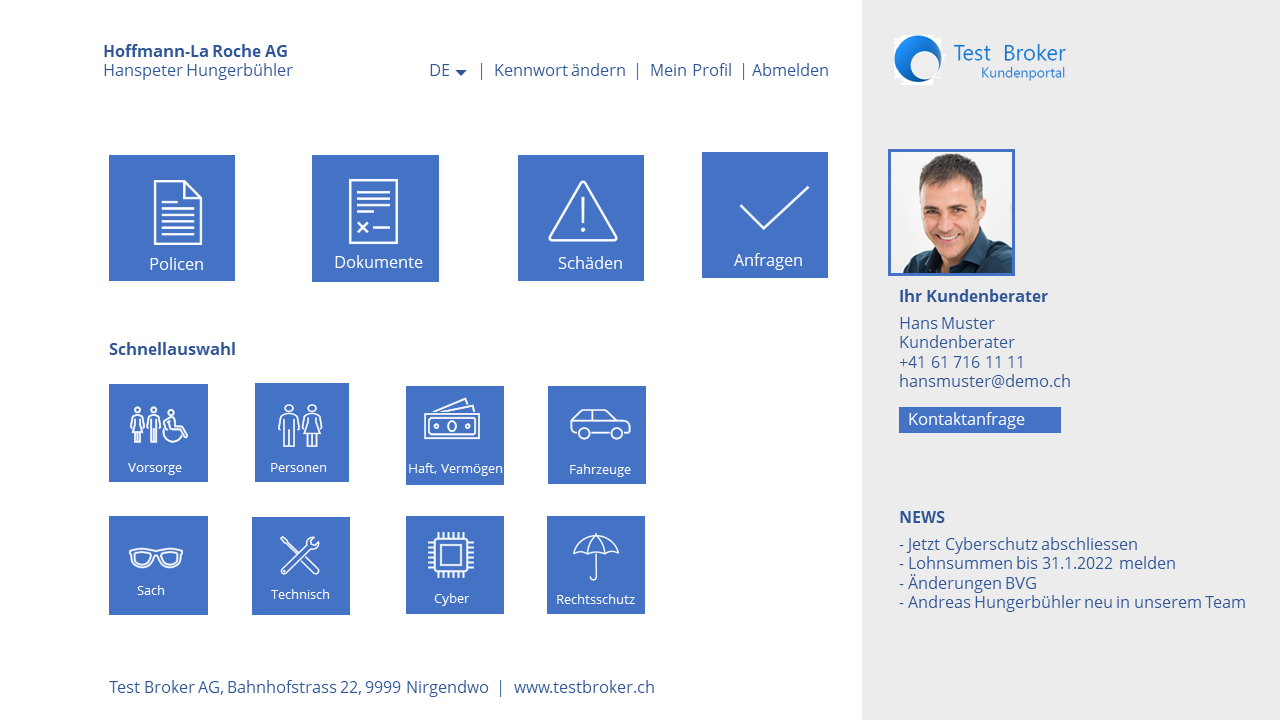
    Home page    (Fig­ure 1)
    - Main nav­i­ga­tion
    - Quick selec­tion con­fig­urable
    - Super­vi­sor con­tact details
    - Infor­ma­tion from the bro­ker
    - User pro­file settings

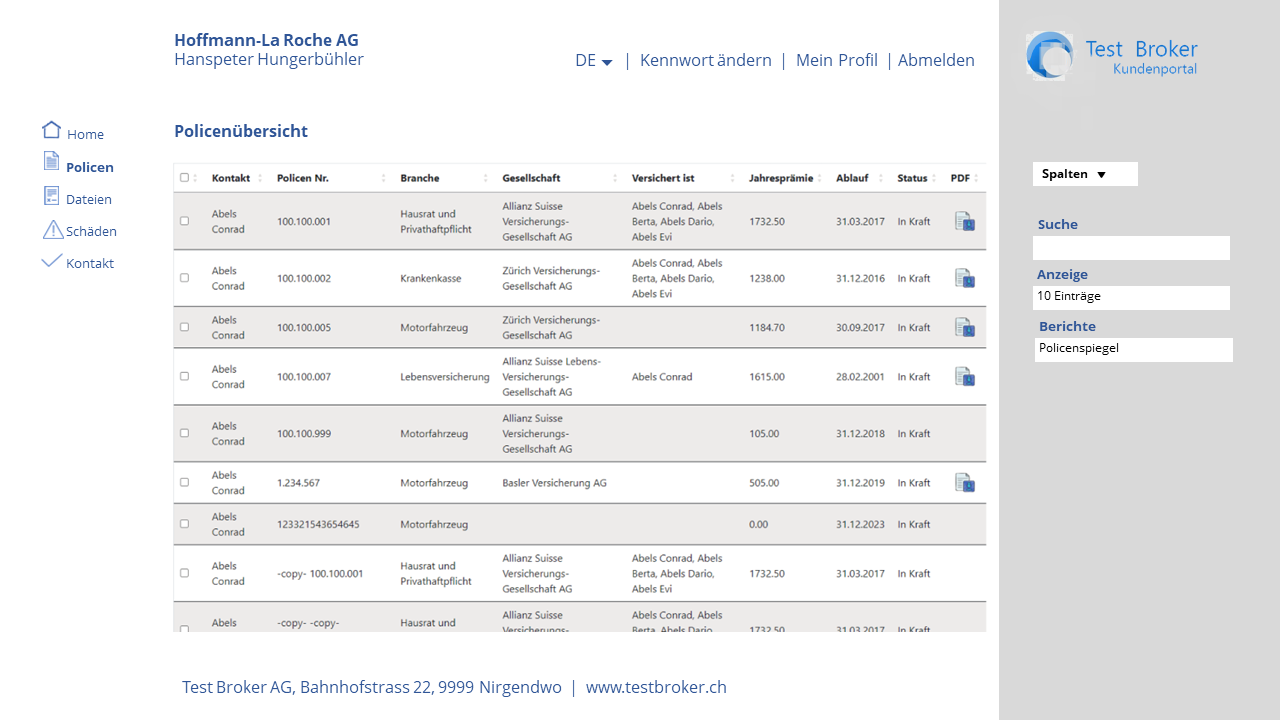
    Pol­i­cy overview    (Fig­ure 2)
    - Glob­al or by sec­tor
    - Search, selec­tions
    - Print
    - Doc­u­ments
    - Jump address to pol­i­cy details
    - Jump address to dam­age
    - Jump address to fur­ther files

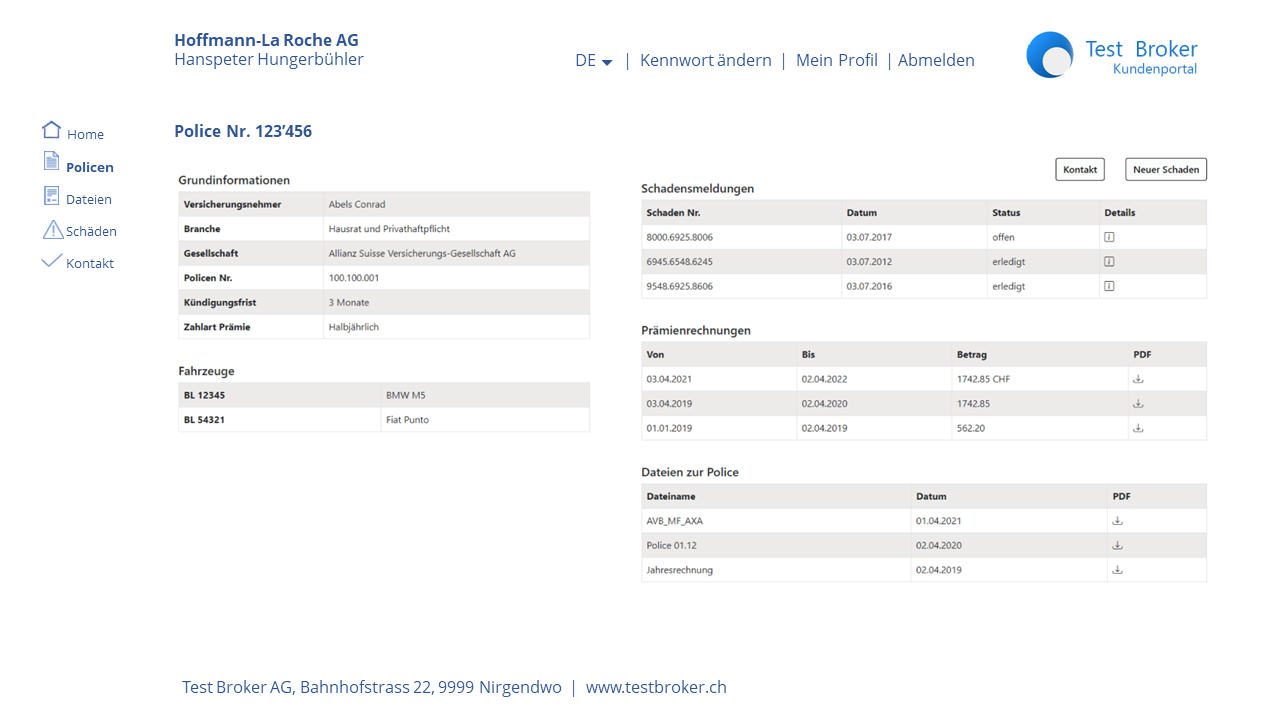
    Pol­i­cy details    (Fig­ure 3)
    - All infor­ma­tion about the pol­i­cy
    - includ­ing doc­u­ments
    - Dam­age overview
    - Overview of invoic­es
    - Overview of doc­u­ments, files

    …and many oth­er functions

    Secure mail dispatch

    Brief­But­ler — the dual solution

    Secure mail dis­patch
    In addi­tion to the secure dis­patch of poli­cies, invoic­es, payslips, invi­ta­tions or dai­ly mail, using the Brief­But­ler soft­ware opens up many more options for you to make your dis­patch process even more effi­cient and sim­ple and to per­fect­ly tai­lor it to your recip­i­ents. Brief­But­ler is data pro­tec­tion-com­pli­ant and is more than just SecureMail.

    Dual solu­tion

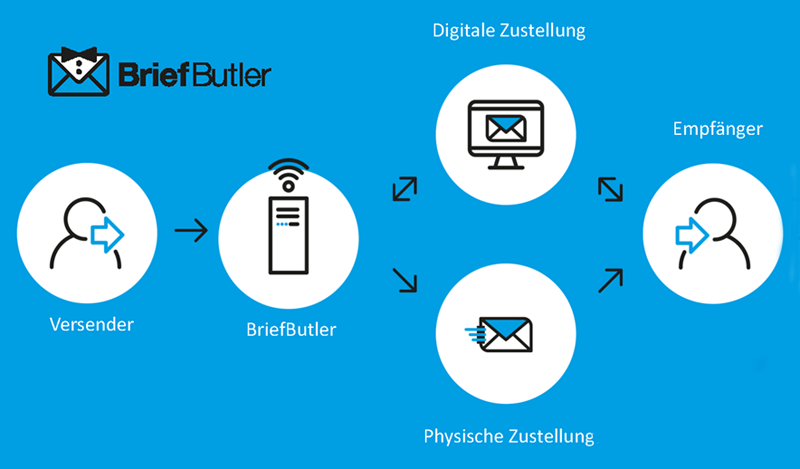
    Dual means twofold or two pos­si­bil­i­ties. And this is exact­ly what Brief­But­ler offers. Mes­sages and doc­u­ments can be sent elec­tron­i­cal­ly via a secure chan­nel or by post via Swiss print­ing and dis­patch ser­vice providers.

    Elec­tron­ic dispatch

    Fast dig­i­tal dis­patch — data pro­tec­tion com­pli­ant — 365 days / 24 hours. Secure login code for recip­i­ents by e‑mail or SMS. Trace­abil­i­ty of deliv­ery and open­ing. No sub­scrip­tion fees. Best price on the mar­ket for secure mes­sag­ing (Secure­Mail).

    Dis­patch by let­ter post

    Do you have recip­i­ents who do not want elec­tron­ic deliv­ery? No prob­lem. You can for­ward the message/documents to the Mail Pro­cess­ing Cen­tre. This cen­tre will take care of print­ing, envelop­ing and sending

          Ser­vice included.

    • Send­ing doc­u­ments and messages 
    • Data pro­tec­tion com­pli­ant accord­ing to nDSG / DSVGO
    • Cer­ti­fied accord­ing to ISO 9001, 14001, 27001
    • Dis­patch from Bro­ker­Star, iOffice
    • Send­ing from Word and Outlook
    • Inter­face API to oth­er programmes
    • Dis­patch either elec­tron­i­cal­ly or by post
    • Selec­table secu­ri­ty level
    • Sig­na­ture optional
    • Costs from CHF 0.41 per consignment
    • Billing only after actu­al dispatch
    • Most favourable price on the market

    Data security, data protection (nDSG)

    Data secu­ri­ty and data pro­tec­tion are play­ing an increas­ing­ly impor­tant role. A cyber attack or data breach usu­al­ly has seri­ous consequences.

    It is there­fore more impor­tant than ever to pro­tect, back up and store data secure­ly. On 1 Sep­tem­ber 2023 the new Swiss Data Pro­tec­tion Act (nDSG) came into force, which also result­ed in adjust­ments to data stor­age. Bro­ker­Star and Bro­ker­Web are pre­pared for this.

    Data secu­ri­ty deals with the gen­er­al pro­tec­tion of data and doc­u­ments. Thus, secu­ri­ty in any form falls under the term data secu­ri­ty, as does per­son­al data. The Data pro­tec­tion on the oth­er hand, relates exclu­sive­ly to the stor­age and use of per­son­al data, at least as far as the legal pro­vi­sions are concerned.

    Data secu­ri­ty and data pro­tec­tion there­fore pur­sue the goal of secur­ing data of all kinds against threats, manip­u­la­tion, unau­tho­rised access or knowl­edge. Ana­logue and dig­i­tal mea­sures can be tak­en to achieve this. First of all, there are tech­ni­cal and organ­i­sa­tion­al mea­sures, which are also used in the con­text of data protection.

    In the dig­i­tal sec­tor, the imple­men­ta­tion of IT secu­ri­ty solu­tions in the form of virus scan­ners, fire­walls etc. con­tributes to the secu­ri­ty of data. Phys­i­cal mea­sures, on the oth­er hand, include access con­trols, fire­proof fil­ing cab­i­nets or safes for sen­si­tive and con­fi­den­tial doc­u­ments. Data back­ups, such as the cre­ation of back­up copies on a sep­a­rate stor­age medi­um, are also essen­tial. A sol­id net­work infra­struc­ture and reg­u­lar updates are the basic pre­req­ui­sites for achiev­ing data secu­ri­ty goals. Data pro­tec­tion, on the oth­er hand, is essen­tial­ly about how per­son­al data is used and stored.

    It is there­fore impor­tant to take organ­i­sa­tion­al and per­son­nel pol­i­cy pre­cau­tions to ensure a high stan­dard of secu­ri­ty with­in the com­pa­ny. Employ­ee train­ing and fur­ther edu­ca­tion, as well as the deploy­ment of spe­cial­ists such as IT secu­ri­ty offi­cers and data pro­tec­tion offi­cers, con­tribute to data secu­ri­ty and are some­times manda­to­ry for com­pli­ance rea­sons. IT secu­ri­ty and data pro­tec­tion offi­cers are ded­i­cat­ed to analysing poten­tial secu­ri­ty gaps in your com­pa­ny and cre­at­ing appro­pri­ate mea­sures to achieve the data secu­ri­ty objective.

    The terms are there­fore not only close­ly linked, but also influ­ence each oth­er. For exam­ple, com­plete data secu­ri­ty can­not be achieved with­out data pro­tec­tion mea­sures, as oth­er­wise per­son­al data may not be ade­quate­ly pro­tect­ed. On the oth­er hand, com­pre­hen­sive data secu­ri­ty mea­sures are a pre­req­ui­site for effec­tive data pro­tec­tion in accor­dance with legal require­ments and best practice.

    The fol­low­ing aspects of the new Data Pro­tec­tion Act are important:

    • Keep track of exact­ly what data is being processed and for what pur­pose. You can pro­vide infor­ma­tion about this at any time and avoid unpleas­ant surprises.
    • Crit­i­cal­ly review the col­lec­tion of per­son­al data. What is effec­tive­ly nec­es­sary for you?
    • Reduce the query cri­te­ria for your cus­tomers to a minimum.
    • Restrict inter­nal data access in the com­pa­ny to as few peo­ple as possible.
    • Check your pri­va­cy pol­i­cy in detail and amend it if necessary.
    • Check and improve the tech­ni­cal default set­tings and user-friendliness.
    • Train your employ­ees to sen­si­tise them to the impor­tance of the topic.

    Details on the new data pro­tec­tion law can be found here  and on the offi­cial site of the fed­er­al government

    Sources, Profi Engi­neer­ing, 2021, SME dig­i­tal­i­sa­tion 2022, Data pro­tec­tion part­ner 2022, www.admin.ch

    Tem­plates and doc­u­ments   (Sources: SIBA, IG B2B, WMC)

    Data processing 

    Portal utilisation 

    Secure Mail 

    IG B2B nDSG 

    Ten cool functions

    1

    Work­ing in mul­ti­ple win­dows (brows­er tab). Edit sev­er­al at the same time by jump­ing from one win­dow to anoth­er. Indi­vid­u­al­i­sa­tion Many set­tings such as view, fil­ters, etc. Page adapts to the device (respon­sive).

    2

    The four lan­guages Ger­man / French / Ital­ian / Eng­lish can be set indi­vid­u­al­ly for each user as well as for each cus­tomer and com­bined as desired. 

    3

    Auto­mat­ic Syn­chro­ni­sa­tion with mail pro­grams (e.g. Microsoft 365) for cal­en­dars, tasks, con­tacts and incom­ing and out­go­ing mail. Not to for­get the Tele­pho­ny inte­gra­tion incom­ing and outgoing.

    4

    The extend­ed File man­ag­er allows you to save poli­cies, invoic­es, quotes and any doc­u­ments and cre­ate cus­tomised file struc­tures as in Explor­er. Doc­u­ments can also be made acces­si­ble to customers.

    5

    Access at any time from all over the world with any device, with any brows­er in any oper­at­ing sys­tem via a secure data con­nec­tion. No instal­la­tion on the device necessary.

    6

    The com­plete­ly new Bro­ker­Web Cus­tomer por­tal offers a cus­tomer jour­ney with exchange of infor­ma­tion, doc­u­ments, process­es and reports con­ve­nient­ly in both direc­tions. Sup­ports the design of the bro­ker and is expandable.

    7

    Mul­ti-fac­tor authen­ti­ca­tion (MFA) ensures a secure login. For access to Bro­ker­Star and Bro­ker­Web, this is con­fig­ured for each cus­tomer with a sin­gle click. Secu­ri­ty and data pro­tec­tion (nDSG 2023) at the high­est level.

    8

    Inter­faces enable the con­nec­tion to third-par­ty pro­grammes. These are avail­able as stan­dard for many appli­ca­tions. (Sobra­do, 3C, One Bro­ker, bro­ker­busi­ness, Aba­cus, Sage …)

    9

    Process­es with­out media dis­con­ti­nu­ity, Work­flow is the name giv­en to auto­mat­ed work­flows that exe­cute a series of actions with­out man­u­al inter­ven­tion, e.g. invoice process, man­date, poli­cies, etc. Work­flow sup­port in the stan­dard system.

    10

    The five-stage Report­ing allows cus­tomised auto­mat­ed reports, charts, dash­boards and cock­pits in addi­tion to the stan­dard eval­u­a­tions as a com­pre­hen­sive Man­age­ment Infor­ma­tion Sys­tem. Also direct­ly in BrokerWeb.


    Making calls with BrokerStar / iOffice

    The com­plete solu­tion
    In addi­tion to the WMC soft­ware, as a cus­tomer you need a tele­phone con­nec­tion and a 3CX tele­phone sys­tem. This can be pro­vid­ed by you or by a tele­phone provider. WMC offers the entire solu­tion from a sin­gle source. In addi­tion to the con­ve­nience and great reli­a­bil­i­ty, you ben­e­fit from sig­nif­i­cant­ly reduced tele­phone costs. The co-oper­a­tion with sip­call and WMC have been in exis­tence for around 20 years.

    Call­ing with Bro­ker­Star and iOf­fice is now avail­able.
    Not only does dialling a tele­phone num­ber in the pro­gramme auto­mat­i­cal­ly cre­ate the con­nec­tion. For incom­ing calls, the sys­tem also recog­nis­es a saved num­ber and auto­mat­i­cal­ly opens the cor­re­spond­ing cus­tomer win­dow. The solu­tion cur­rent­ly works exclu­sive­ly with the pop­u­lar 3CX tele­phone sys­tem. The low costs make this use­ful option a highlight.


    The three com­po­nents of the solution

    1. voice over IP (VoIP)

    Since 2019, tele­pho­ny in Switzer­land has been made exclu­sive­ly via the inter­net. New meth­ods recog­nise whether calls or data are involved. In most cas­es, all com­mu­ni­ca­tion is trans­mit­ted via the same connection.

    2. com­put­er inte­grat­ed telephony

    Just as com­put­er data can con­tain a link to a web­site or an e‑mail address, direct links to a tele­phone num­ber are also avail­able. Click­ing on them cre­ates a con­nec­tion direct­ly to the VoIP-based tele­phone net­work or via a tele­phone sys­tem. This can be locat­ed any­where on the Internet.

    3. the CTI soft­ware solution 

    WMC pro­grammes such as Bro­ker­Star or iOf­fice have inte­grat­ed tele­pho­ny. The only link required is a com­pat­i­ble tele­phone sys­tem. Con­nec­tion to a 3CX is avail­able as stan­dard. This con­nec­tion option is also rec­om­mend­ed for Teams tele­pho­ny. Inter­faces to oth­er sys­tems can be cre­at­ed if required.

    What does digitalisation actually mean

    Dig­i­tal­i­sa­tion is the gener­ic term for the dig­i­tal trans­for­ma­tion of soci­ety and the econ­o­my. It describes the tran­si­tion from the 20th cen­tu­ry, which was char­ac­terised by ana­logue tech­nolo­gies, to the age of knowl­edge and cre­ativ­i­ty, which is shaped by dig­i­tal tech­nolo­gies and dig­i­tal innovations.

    Dig­i­tal­i­sa­tion is the most impor­tant social and eco­nom­ic devel­op­ment of our time. But what do terms like: Dig­i­tal change, dig­i­tal trans­for­ma­tion, dig­i­tal disruption?


    What dig­i­tal skills will we need in the future? What are dig­i­tal busi­ness models?

    Com­pa­nies and organ­i­sa­tions are mak­ing progress with dig­i­tal trans­for­ma­tion at dif­fer­ent speeds. While some lim­it them­selves to dig­i­tal­is­ing exist­ing busi­ness process­es, oth­ers proac­tive­ly devel­op dig­i­tal con­cepts and busi­ness mod­els. The deci­sive fac­tor for suc­cess in dig­i­tal­i­sa­tion is the so-called „dig­i­tal matu­ri­ty lev­el“. This is a sci­en­tif­i­cal­ly based 360-degree instru­ment that is used to analyse all the fac­tors that are impor­tant for change.

    Digi­ti­sa­tion explained simply

    Over the past 20 years or so, var­i­ous dig­i­tal tech­nolo­gies (mobile inter­net, arti­fi­cial intel­li­gence, inter­net of things, etc.) have been dras­ti­cal­ly devel­oped and have made the leap from expert appli­ca­tions to every­day life. Just as the inno­va­tion of the steam engine has changed soci­ety, so too has the dig­i­tal transformation.

    Dig­i­tal­i­sa­tion is dri­ven by tech­nol­o­gy. Dig­i­tal inno­va­tions are cre­at­ed on the basis of the dig­i­tal tech­nolo­gies devel­oped: New use cas­es dri­ven by exist­ing com­pa­nies and start-ups with ven­ture cap­i­tal. This leads to dif­fer­ent speeds. While pub­lic admin­is­tra­tion, for exam­ple, often only accepts paper doc­u­ments and works with files, mar­kets are chang­ing much faster. All sec­tors are now affect­ed by dig­i­tal­i­sa­tion. Dig­i­tal­i­sa­tion is also influ­enc­ing the future of the finance and insur­ance indus­try. New forms are only pos­si­ble thanks to dig­i­tal­i­sa­tion tech­nolo­gies, which will con­tin­ue to spread in the future.

    Dig­i­tal­i­sa­tion is chang­ing the future of tra­di­tion­al pro­fes­sions. In future, doc­tors will be increas­ing­ly sup­port­ed by e‑health appli­ca­tions, espe­cial­ly in diag­nos­tics. Legal ser­vices (cur­rent­ly pri­mar­i­ly pro­vid­ed by lawyers) will be sup­ple­ment­ed or replaced by dig­i­tal ser­vices from the legal tech sec­tor. And the term Insuretech has already been established.

    In the future, dig­i­tal­i­sa­tion will make new demands on schools, edu­ca­tion and train­ing in all areas. It is the task of busi­ness, asso­ci­a­tions and pol­i­tics to pre­pare soci­ety for the com­ing changes.

    Dig­i­tal­i­sa­tion and companies

    Dig­i­tal­i­sa­tion has an impact on com­pa­nies of all sizes. On the one hand, com­pa­nies are using dig­i­tal tech­nolo­gies to dig­i­talise their busi­ness process­es, i.e. for process opti­mi­sa­tion and process inno­va­tion. This is also being dri­ven by dig­i­tal trans­for­ma­tion and in some cas­es realised by start-ups. The chal­lenge for com­pa­nies in dig­i­tal­i­sa­tion is to iden­ti­fy new cus­tomer needs that arise due to the grow­ing spread of dig­i­tal ser­vices and apps.

    The so-called „dig­i­tal natives“ have also cre­at­ed new tar­get groups. Com­pa­nies often need dif­fer­ent mar­ket­ing and sales strate­gies to increase their cus­tomer focus on these tar­get groups. Action must be adapt­ed in order to be suc­cess­ful in the dig­i­tal trans­for­ma­tion Com­pa­nies must address the ques­tion: How do we want to reach cus­tomers tomor­row? What role do new trends play? How do we deal with the increas­ing­ly indi­vid­u­alised needs of our customers?

    Devel­op­ment of dig­i­tal work­flows and process­es: Say­ing good­bye to paper files by intro­duc­ing process­es and work­flows in the com­pa­ny, some of which need to be rad­i­cal­ly rethought as a result of dig­i­tal­i­sa­tion, such as the han­dling of data that is gen­er­at­ed with­in the com­pa­ny, in con­nec­tion with a company’s activ­i­ties and by cus­tomers. Data can be used to devel­op new ser­vices and busi­ness mod­els. Dig­i­tal­i­sa­tion presents us all with the chal­lenge of per­ma­nent­ly chang­ing and adapt­ing. Com­pet­i­tive advan­tages from the past only exist to a lim­it­ed extent. To achieve this, com­pa­nies need to dri­ve dig­i­tal trans­for­ma­tion with­in the organ­i­sa­tion and increase their dig­i­tal readiness.

    Secure login

    Mul­ti-fac­tor authen­ti­ca­tion is a secu­ri­ty pro­ce­dure in which a user pro­vides two dif­fer­ent fea­tures to iden­ti­fy them­selves. One of the fea­tures is usu­al­ly a phys­i­cal token, such as a secu­ri­ty code or an SMS.
    Peo­ple like to talk about some­thing that „you have“ and some­thing that „you know”. A typ­i­cal exam­ple of two-fac­tor authen­ti­ca­tion is a QR code, while the PIN (per­son­al iden­ti­fi­ca­tion num­ber) forms the asso­ci­at­ed infor­ma­tion. The com­bi­na­tion of the two makes it more dif­fi­cult for a stranger to access the user’s data.

    Mul­ti-fac­tor authen­ti­ca­tion for more secure connections

    Mul­ti-fac­tor authen­ti­ca­tion cor­re­sponds to two-fac­tor authen­ti­ca­tion, where­by dif­fer­ent tokens can be used. This allows the user to choose which method suits them best. Mod­ern secu­ri­ty process­es often con­sist of a pass­word and bio­met­ric data such as a fin­ger­print or voice recognition.

    An attack­er may suc­ceed in crack­ing a sin­gle authen­ti­ca­tion fac­tor, for exam­ple. For exam­ple, a thor­ough search of the victim’s envi­ron­ment can lead to the dis­cov­ery of an employ­ee ID card or a user ID with the cor­re­spond­ing pass­word that has end­ed up in the rub­bish. Or a care­less­ly dis­card­ed hard dri­ve may con­tain a pass­word data­base. How­ev­er, if oth­er fac­tors are required for authen­ti­ca­tion, the attack­er faces at least one more hur­dle to overcome.

    The major­i­ty of today’s attacks are car­ried out via inter­net con­nec­tions. Mul­ti-fac­tor authen­ti­ca­tion can make these remote attacks far less dan­ger­ous because sim­ply crack­ing the pass­word is no longer enough to gain access. This is because it is very unlike­ly that the attack­er will also gain pos­ses­sion of the phys­i­cal device or code linked to the user account. Each addi­tion­al authen­ti­ca­tion fac­tor there­fore makes a sys­tem more secure. This is because the indi­vid­ual fac­tors are inde­pen­dent of each oth­er. If one of the fac­tors is com­pro­mised, this does not affect the others.

    Bro­ker­Star and iOf­fice by WMC use mul­ti-fac­tor authen­ti­ca­tion from ver­sion 2.4.

    Mul­ti-fac­tor authentication
    Mul­ti-fac­tor authentication