


What does digitalisation actually mean

Dig­i­tal­i­sa­tion is the gener­ic term for the dig­i­tal trans­for­ma­tion of soci­ety and the econ­o­my. It describes the tran­si­tion from the 20th cen­tu­ry, which was char­ac­terised by ana­logue tech­nolo­gies, to the age of knowl­edge and cre­ativ­i­ty, which is shaped by dig­i­tal tech­nolo­gies and dig­i­tal innovations.

Dig­i­tal­i­sa­tion is the most impor­tant social and eco­nom­ic devel­op­ment of our time. But what do terms like: Dig­i­tal change, dig­i­tal trans­for­ma­tion, dig­i­tal disruption?


What dig­i­tal skills will we need in the future? What are dig­i­tal busi­ness models?

Com­pa­nies and organ­i­sa­tions are mak­ing progress with dig­i­tal trans­for­ma­tion at dif­fer­ent speeds. While some lim­it them­selves to dig­i­tal­is­ing exist­ing busi­ness process­es, oth­ers proac­tive­ly devel­op dig­i­tal con­cepts and busi­ness mod­els. The deci­sive fac­tor for suc­cess in dig­i­tal­i­sa­tion is the so-called „dig­i­tal matu­ri­ty lev­el“. This is a sci­en­tif­i­cal­ly based 360-degree instru­ment that is used to analyse all the fac­tors that are impor­tant for change.

Digi­ti­sa­tion explained simply

Over the past 20 years or so, var­i­ous dig­i­tal tech­nolo­gies (mobile inter­net, arti­fi­cial intel­li­gence, inter­net of things, etc.) have been dras­ti­cal­ly devel­oped and have made the leap from expert appli­ca­tions to every­day life. Just as the inno­va­tion of the steam engine has changed soci­ety, so too has the dig­i­tal transformation.

Dig­i­tal­i­sa­tion is dri­ven by tech­nol­o­gy. Dig­i­tal inno­va­tions are cre­at­ed on the basis of the dig­i­tal tech­nolo­gies devel­oped: New use cas­es dri­ven by exist­ing com­pa­nies and start-ups with ven­ture cap­i­tal. This leads to dif­fer­ent speeds. While pub­lic admin­is­tra­tion, for exam­ple, often only accepts paper doc­u­ments and works with files, mar­kets are chang­ing much faster. All sec­tors are now affect­ed by dig­i­tal­i­sa­tion. Dig­i­tal­i­sa­tion is also influ­enc­ing the future of the finance and insur­ance indus­try. New forms are only pos­si­ble thanks to dig­i­tal­i­sa­tion tech­nolo­gies, which will con­tin­ue to spread in the future.

Dig­i­tal­i­sa­tion is chang­ing the future of tra­di­tion­al pro­fes­sions. In future, doc­tors will be increas­ing­ly sup­port­ed by e‑health appli­ca­tions, espe­cial­ly in diag­nos­tics. Legal ser­vices (cur­rent­ly pri­mar­i­ly pro­vid­ed by lawyers) will be sup­ple­ment­ed or replaced by dig­i­tal ser­vices from the legal tech sec­tor. And the term Insuretech has already been established.

In the future, dig­i­tal­i­sa­tion will make new demands on schools, edu­ca­tion and train­ing in all areas. It is the task of busi­ness, asso­ci­a­tions and pol­i­tics to pre­pare soci­ety for the com­ing changes.

Dig­i­tal­i­sa­tion and companies

Dig­i­tal­i­sa­tion has an impact on com­pa­nies of all sizes. On the one hand, com­pa­nies are using dig­i­tal tech­nolo­gies to dig­i­talise their busi­ness process­es, i.e. for process opti­mi­sa­tion and process inno­va­tion. This is also being dri­ven by dig­i­tal trans­for­ma­tion and in some cas­es realised by start-ups. The chal­lenge for com­pa­nies in dig­i­tal­i­sa­tion is to iden­ti­fy new cus­tomer needs that arise due to the grow­ing spread of dig­i­tal ser­vices and apps.

The so-called „dig­i­tal natives“ have also cre­at­ed new tar­get groups. Com­pa­nies often need dif­fer­ent mar­ket­ing and sales strate­gies to increase their cus­tomer focus on these tar­get groups. Action must be adapt­ed in order to be suc­cess­ful in the dig­i­tal trans­for­ma­tion Com­pa­nies must address the ques­tion: How do we want to reach cus­tomers tomor­row? What role do new trends play? How do we deal with the increas­ing­ly indi­vid­u­alised needs of our customers?

Devel­op­ment of dig­i­tal work­flows and process­es: Say­ing good­bye to paper files by intro­duc­ing process­es and work­flows in the com­pa­ny, some of which need to be rad­i­cal­ly rethought as a result of dig­i­tal­i­sa­tion, such as the han­dling of data that is gen­er­at­ed with­in the com­pa­ny, in con­nec­tion with a company’s activ­i­ties and by cus­tomers. Data can be used to devel­op new ser­vices and busi­ness mod­els. Dig­i­tal­i­sa­tion presents us all with the chal­lenge of per­ma­nent­ly chang­ing and adapt­ing. Com­pet­i­tive advan­tages from the past only exist to a lim­it­ed extent. To achieve this, com­pa­nies need to dri­ve dig­i­tal trans­for­ma­tion with­in the organ­i­sa­tion and increase their dig­i­tal readiness.

The broker of the future

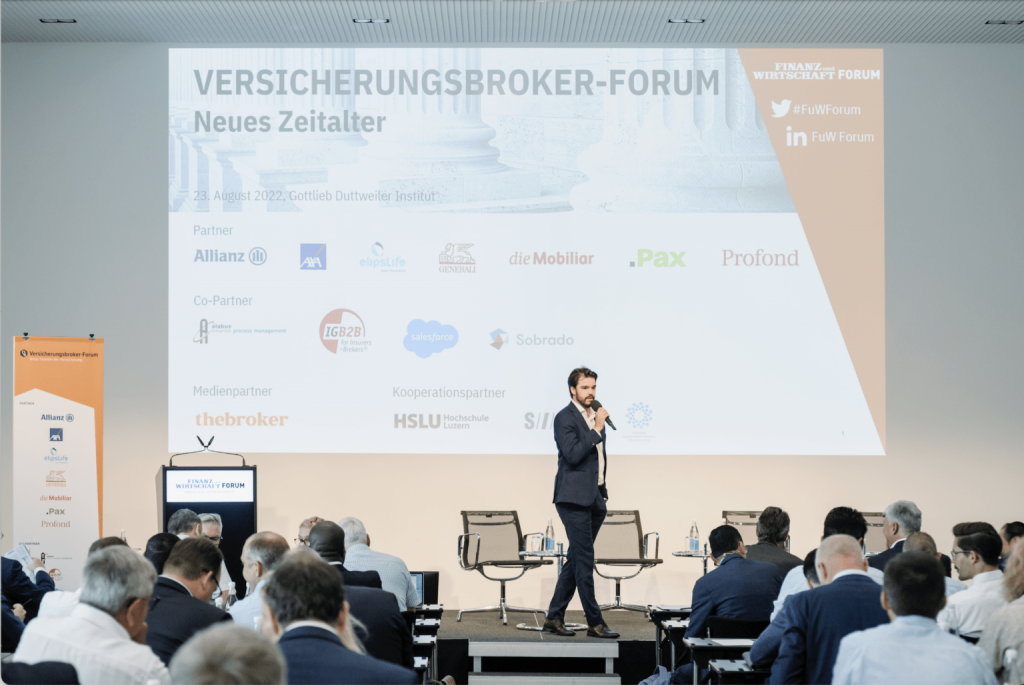
The insur­ance mar­ket will change mas­sive­ly over the next few years. In his pre­sen­ta­tion at the Insur­ance Bro­ker Forum 2022, Marin Vlasec from Pax out­lined the require­ments for the bro­ker of the future. A guide­line is now avail­able, which WMC is mak­ing avail­able to all inter­est­ed bro­kers with the kind per­mis­sion of Pax.

Cre­at­ing dig­i­tal cus­tomer val­ue
Insur­ance bro­kers are under pres­sure due to tech­no­log­i­cal change and con­cen­tra­tion in the indus­try. Can small­er inde­pen­dent bro­kers hold their own against the ever-increas­ing com­pe­ti­tion? Will the suc­cess of the future bro­ker depend on its dig­i­tal expertise?

1. cur­rent situation

The bro­ker land­scape is char­ac­terised by two devel­op­ments. On the one hand, large bro­ker­age com­pa­nies are buy­ing up small­er ones. This lim­its the oppor­tu­ni­ties for small­er and medi­um-sized bro­kers on the mar­ket. The pres­sure on them is increas­ing. Sec­ond­ly, dig­i­tal­i­sa­tion is hav­ing an impact on offer­ings and access chan­nels to cor­po­rate and pri­vate clients. What does this mean for the future of the small­er group? Dig­i­tal­i­sa­tion can rep­re­sent a con­flict of objec­tives — because it also changes cus­tomer needs and the way in which cus­tomers find out about offers. The use of dig­i­tal access chan­nels could, for exam­ple, lead to the risk of a reduc­tion in per­son­al con­tact with cus­tomers. They are already obtain­ing more infor­ma­tion via the inter­net and social media than they did a few years ago.

2. core ser­vices of an insur­ance broker

The core ser­vices of an insur­ance bro­ker can be cat­e­gorised as con­sult­ing, admin­is­tra­tion & sup­port, risk man­age­ment and com­par­isons. Through these basic ser­vices, the insur­ance bro­ker cre­ates con­crete added val­ue for the pol­i­cy­hold­er. This is a sim­pli­fi­ca­tion of ser­vices and tasks, as shown in the research work on mea­sur­ing cus­tomer value.

  • Coun­selling: Cov­er­age analy­ses and con­cepts, safe­ty rec­om­men­da­tions.
  • Admin­is­tra­tion & Sup­port:  Claims man­age­ment, answer­ing enquiries and shar­ing infor­ma­tion.
  • Risk man­age­ment: Iden­ti­fy­ing and weigh­ing up risks.
  • Com­par­isons:  Price and per­for­mance com­par­isons, show cov­er­age options.

3. cre­ation of dig­i­tal cus­tomer value

The stud­ies show: There is a so-called readi­ness gap among cus­tomers to receive offers dig­i­tal­ly. This means that those ser­vices that can be used dig­i­tal­ly with­out great effort gen­er­ate the same or greater cus­tomer val­ue than in an ana­logue dia­logue. The gap exists to vary­ing degrees for pri­vate and cor­po­rate customers.

Both pri­vate and cor­po­rate cus­tomers are will­ing to digi­tise. How­ev­er, pri­vate cus­tomers are more will­ing to obtain ser­vices via chats, apps and web plat­forms than cor­po­rate cus­tomers. The lat­ter are less will­ing to receive advice via dig­i­tal access chan­nels because cor­po­rate offer­ings are com­plex and require a lot of con­sul­ta­tion. The direct cus­tomer rela­tion­ship dur­ing the con­sul­ta­tion remains very important.

There is usu­al­ly a healthy mix of ages among pri­vate cus­tomers: old­er peo­ple are less will­ing to digi­tise. So if you are active in the pri­vate cus­tomer seg­ment, you don’t have to wor­ry that your cus­tomers will only be dig­i­tal­ly ultra-com­pe­tent users.

Also in the area of Admin­is­tra­tion & Sup­port pri­vate cus­tomers are more will­ing to obtain the ser­vice via dig­i­tal access chan­nels. Dis­trib­ut­ing infor­ma­tion via a dig­i­tal plat­form is advan­ta­geous because pol­i­cy­hold­ers can save time. This rep­re­sents added val­ue — just like the cre­ation of Com­pare. This can be done quick­ly and effi­cient­ly using a dig­i­tal tool such as Sobra­do in con­junc­tion with suit­able bro­ker soft­ware. For pay­roll dec­la­ra­tions and stan­dard­ised muta­tions, how­ev­er, the use of dig­i­tal access chan­nels makes sense for cor­po­rate cus­tomers, as time and effort can be saved here.

Coun­selling remains an area in which dig­i­tal­i­sa­tion has lit­tle rel­e­vance. On the one hand, the stud­ies have shown that cus­tomer loy­al­ty is very impor­tant and has a sig­nif­i­cant val­ue from the out­set: This means that it devel­ops not with the times, but is rel­e­vant from the very first cus­tomer meet­ing. Face-to-face dia­logue is still extreme­ly impor­tant, as trust is con­veyed more strong­ly through interaction.

Trust is also extreme­ly impor­tant when weigh­ing up risks: it is there­fore worth­while to con­sid­er both types of cus­tomer as part of the risk man­age­ment process. Risk man­age­ment pri­mar­i­ly on the ana­logue contact.

4. sum­ma­ry: where to focus on dig­i­tal­i­sa­tion - and where not

For pri­vate cus­tomers: In future, the insur­ance bro­ker will be a plat­form provider with selec­tive, cus­tomer-con­trolled access to per­son­alised advice. The end cus­tomer should be giv­en the choice of dig­i­tal access to advice. This should pri­mar­i­ly take place in a face-to-face sit­u­a­tion. This cre­ates trust. How­ev­er, the advice does not have to be ana­logue. Soft­ware can be used to make this pos­si­ble in the dig­i­tal space.

For cor­po­rate cus­tomers: The insur­ance bro­ker is a prob­lem solver and should be spe­cialised in the fol­low­ing areas Coun­selling and Risk man­age­ment offer high­ly indi­vid­u­alised ser­vices. Intel­li­gent reports sup­port him in this. With Admin­is­tra­tion and Com­pare he can use dig­i­tal tools to effi­cient­ly cre­ate val­ue for cor­po­rate customers.


Sources: Pax Insur­ance, 2022; The Bro­ker 2022

ERP and digitalisation

Modern ERP systems as the basis for transformation

When ERP sys­tems inte­grate the build­ing blocks of dig­i­tal­i­sa­tion, they become the basis of the dig­i­tal future. An ERP sys­tem rep­re­sents the „sin­gle source of truth“ in a com­pa­ny, it pro­vides the nec­es­sary data and ser­vices, it secures the busi­ness process­es, it pre­pares deci­sions or even makes them itself, it sup­ports the busi­ness man­age­ment of the dig­i­tal trans­for­ma­tion, it oper­ates on the dig­i­tal plat­forms and it maps new busi­ness models.

Definition of an ERP (Enterprise Resource Planning) system

The ERP sys­tem links a company’s mas­ter and trans­ac­tion data and brings togeth­er logis­ti­cal, busi­ness and com­mer­cial infor­ma­tion. The ERP sys­tem pro­vides the con­text for inter­pret­ing this data. It acts as a hub for inte­gra­tion into inter­nal and exter­nal plat­forms and pro­vides its func­tions as ser­vices. In busi­ness process­es, ERP sys­tems guar­an­tee the secu­ri­ty of results and data. In view of increas­ing net­work­ing, they must ful­fil the high­est secu­ri­ty stan­dards and reg­u­lar audits check the authen­ti­ca­tion, rights man­age­ment and encryp­tion of the systems.

ERP sys­tems use arti­fi­cial intel­li­gence to auto­mate and pre­pare deci­sions. The data includes trans­ac­tions, cus­tomer infor­ma­tion, social media and sen­sor infor­ma­tion from the Inter­net of Things. An adap­tive con­trol loop ensures that the mod­els and algo­rithms are con­stant­ly learning.

From networking to the business management of digitalisation

The ERP sys­tem sup­ports the busi­ness man­age­ment of the dig­i­tal trans­for­ma­tion and ensures that the company’s reor­gan­i­sa­tion pays off finan­cial­ly. The ERP sys­tem aligns all process­es with the company’s eco­nom­ic goals. It links the flow of goods and the flow of val­ues, cal­cu­lates orders and assess­es their prof­itabil­i­ty, and plans pro­duc­tion, dis­tri­b­u­tion and sales. From mas­ter data to prod­ucts and ser­vices, this sys­tem cre­ates an inter­face to cus­tomers and their orders.

On the dig­i­tal plat­forms, an ERP sys­tem acts as a rep­re­sen­ta­tive of the com­pa­ny, pro­vides its func­tions as a ser­vice and inte­grates ser­vices from the dig­i­tal plat­forms. In the sup­ply chain, it con­trols all process­es across com­pa­ny boundaries.

When it comes to new busi­ness mod­els, the ERP sys­tem con­trols and inte­grates the process­es. It cre­ates the basis for per­son­al­is­ing prod­ucts and ser­vices. In the ser­vice sec­tor, Smart Ser­vices opti­mise the sched­ul­ing of impor­tant tasks. Oth­er ser­vices include for­ward-look­ing work and the con­trol of impor­tant process­es. This is just as true in the ser­vice sec­tor as it is in production.

Over­all, ERP sys­tems will remain a cen­tral com­po­nent of the IT land­scape. For­ward-look­ing ERP providers have already start­ed to adapt their sys­tems to the require­ments of the dig­i­tal work­ing world. This process is like­ly to con­tin­ue rapid­ly in the com­ing years. An inten­sive, con­tin­u­ous dia­logue between ERP providers, users and mar­ket play­ers is impor­tant here. Thanks to the glob­al net­work­ing of sys­tems and process­es, dig­i­tal­i­sa­tion opens up unprece­dent­ed free­dom for every­one involved. A provider that does not know the exact require­ments of its cus­tomers, tar­get indus­tries and part­ners is unlike­ly to have much chance of hold­ing its own in this mar­ket in the long term.

ERP for insurance brokers

ERP sys­tems are avail­able for every indus­try. They each take into account their spe­cif­ic cir­cum­stances. While the term ERP is wide­ly used in indus­try, banks and insur­ance com­pa­nies tend to use the term core systems.

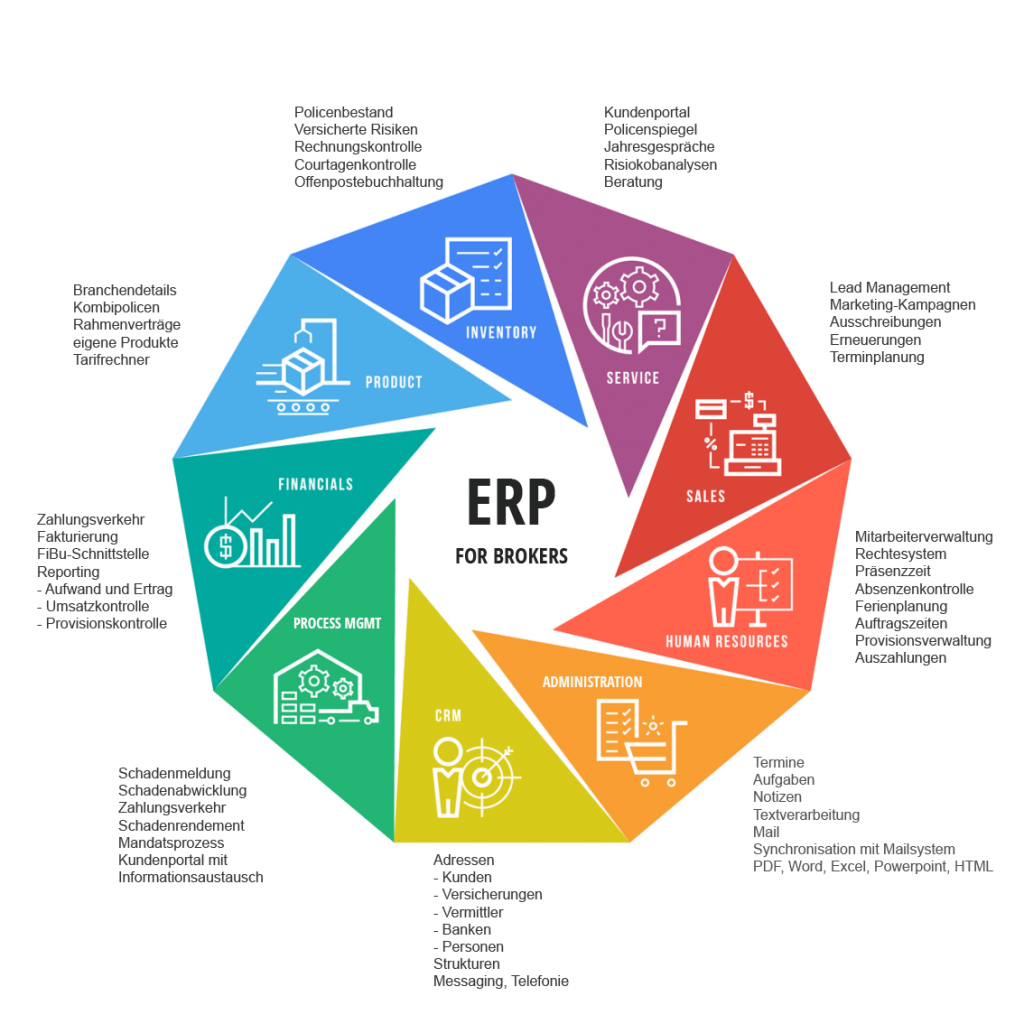
Bro­kerStar by WMC is an ERP sys­tem spe­cial­ly designed to meet the needs of insur­ance bro­kers, ban­cas­sur­ance bro­kers and small insur­ance com­pa­nies. It cov­ers all essen­tial func­tion­al areas in the broker’s day-to-day busi­ness. It also offers many inter­faces to oth­er pro­grammes such as finan­cial and pay­roll account­ing as well as lead­ing indus­try appli­ca­tions such as Sobra­do, brokerbusiness.ch, One Bro­ker, 3C and others

Func­tion­al scope of the Bro­ker ERP Bro­kerStar by WMC

Source: IT-Matchmaker.news — 31/01/2020 —
ERP as an enabler of dig­i­tal trans­for­ma­tion —
Lec­ture Dirk Bingler

New invoicing process 21

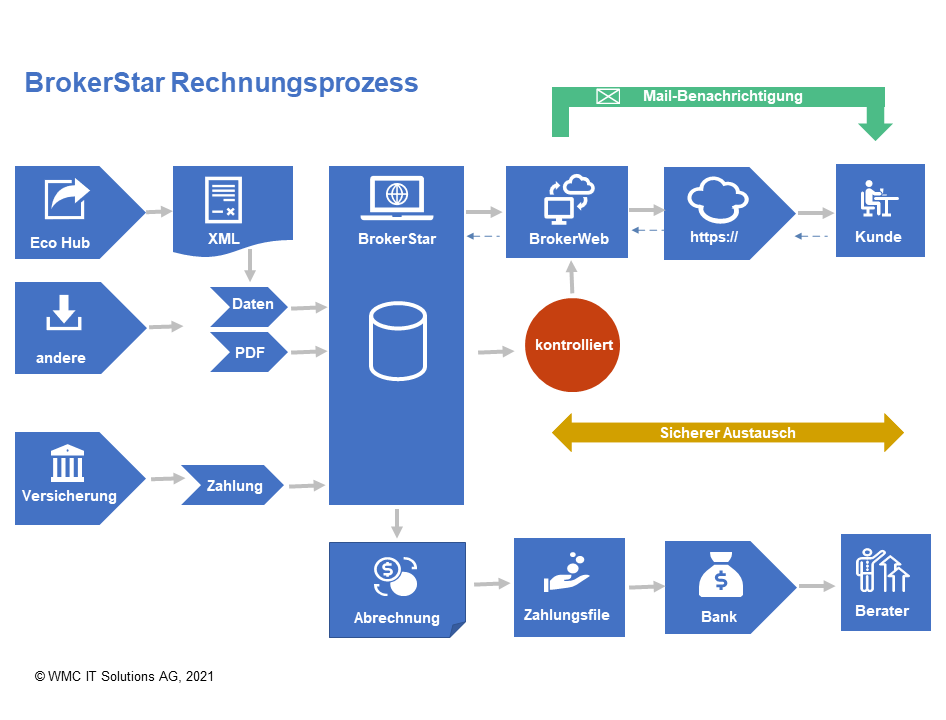
The invoic­ing process 21 cov­ers all steps from invoice and bro­ker­age fee con­trol and deliv­ery of the invoice to the cus­tomer to bro­ker invoic­ing and post­ing in finan­cial account­ing. Dif­fer­ent vari­ants can be select­ed depend­ing on requirements

Receipt of the invoice
Invoic­es can be deliv­ered in the fol­low­ing ways:

  • Eco Hub / DXP
  • One Bro­ker
  • Direct­ly through insurers
  • Man­u­al input

Data and XML
A dis­tinc­tion is made between struc­tured data and doc­u­ments. An XML file can con­tain both data and PDFs. Both are stored ful­ly auto­mat­i­cal­ly in BrokerStar.

Invoice ver­i­fi­ca­tion
A fixed pro­ce­dure must be fol­lowed in Bro­ker­Star for the ful­ly auto­mat­ic check­ing of pre­mi­um invoic­es: Deb­it posi­tion — read­ing — dif­fer­ence han­dling
⇒ for bro­ker­age fee control

Mail noti­fi­ca­tion
As soon as the invoice has been checked and giv­en the elec­tron­ic «checked» stamp, the cus­tomer receives a noti­fi­ca­tion to down­load the invoice from BrokerWeb.

Bro­ker­Web
The cus­tomer recog­nis­es the new invoice in the cus­tomer por­tal, which can be down­loaded. In this case, there is no need to send the accom­pa­ny­ing let­ter by post.

One Bro­ker
The process for auto­mat­ed invoice pro­cess­ing can be com­bined with Bro­ker­Star. The lat­est tech­nol­o­gy extracts data from dif­fer­ent sources.

Inter­me­di­ary billing
If there are inter­me­di­aries with a com­mis­sion claim, the state­ments can be cre­at­ed auto­mat­i­cal­ly and the pay­ments trans­ferred direct­ly to e‑banking.

Account­ing
Bro­ker­Star main­tains open item account­ing. With the finan­cial account­ing inter­face, account­ing-rel­e­vant trans­ac­tions are trans­ferred direct­ly to Sage or Aba­cus programmes.

Secure login

Mul­ti-fac­tor authen­ti­ca­tion is a secu­ri­ty pro­ce­dure in which a user pro­vides two dif­fer­ent fea­tures to iden­ti­fy them­selves. One of the fea­tures is usu­al­ly a phys­i­cal token, such as a secu­ri­ty code or an SMS.
Peo­ple like to talk about some­thing that „you have“ and some­thing that „you know”. A typ­i­cal exam­ple of two-fac­tor authen­ti­ca­tion is a QR code, while the PIN (per­son­al iden­ti­fi­ca­tion num­ber) forms the asso­ci­at­ed infor­ma­tion. The com­bi­na­tion of the two makes it more dif­fi­cult for a stranger to access the user’s data.

Mul­ti-fac­tor authen­ti­ca­tion for more secure connections

Mul­ti-fac­tor authen­ti­ca­tion cor­re­sponds to two-fac­tor authen­ti­ca­tion, where­by dif­fer­ent tokens can be used. This allows the user to choose which method suits them best. Mod­ern secu­ri­ty process­es often con­sist of a pass­word and bio­met­ric data such as a fin­ger­print or voice recognition.

An attack­er may suc­ceed in crack­ing a sin­gle authen­ti­ca­tion fac­tor, for exam­ple. For exam­ple, a thor­ough search of the victim’s envi­ron­ment can lead to the dis­cov­ery of an employ­ee ID card or a user ID with the cor­re­spond­ing pass­word that has end­ed up in the rub­bish. Or a care­less­ly dis­card­ed hard dri­ve may con­tain a pass­word data­base. How­ev­er, if oth­er fac­tors are required for authen­ti­ca­tion, the attack­er faces at least one more hur­dle to overcome.

The major­i­ty of today’s attacks are car­ried out via inter­net con­nec­tions. Mul­ti-fac­tor authen­ti­ca­tion can make these remote attacks far less dan­ger­ous because sim­ply crack­ing the pass­word is no longer enough to gain access. This is because it is very unlike­ly that the attack­er will also gain pos­ses­sion of the phys­i­cal device or code linked to the user account. Each addi­tion­al authen­ti­ca­tion fac­tor there­fore makes a sys­tem more secure. This is because the indi­vid­ual fac­tors are inde­pen­dent of each oth­er. If one of the fac­tors is com­pro­mised, this does not affect the others.

Bro­ker­Star and iOf­fice by WMC use mul­ti-fac­tor authen­ti­ca­tion from ver­sion 2.4.

Mul­ti-fac­tor authentication