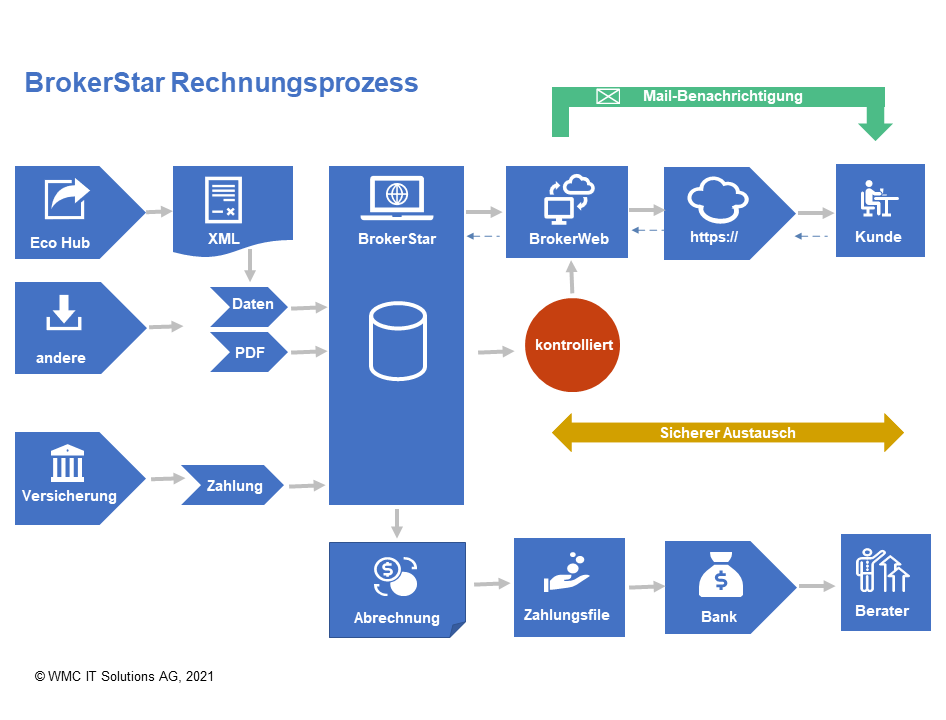
Automatic invoice dispatch

Send­ing invoic­es by post is already a thing of the past in many com­pa­nies. At the same time, cus­tomer require­ments regard­ing the type of invoic­ing are increasing.

Bro­ker­Star offers four options for send­ing invoic­es automatically:

  • Avail­able in the Bro­ker­Web cus­tomer portal
  • Dis­patch by e‑mail
  • Secure elec­tron­ic dis­patch with BriefButler
  • Elec­tron­ic trans­mis­sion to the Brief­But­ler mail cen­tre. This takes over the Print­out and dis­patch by post

Auto­mat­ic dis­patch offers you the fol­low­ing advantages:

You save mon­ey as there are no postage, paper, ton­er or enve­lope costs.
You save time thanks to the fast & uncom­pli­cat­ed dis­patch of invoic­es
You pro­tect the envi­ron­ment as there is no need for phys­i­cal paper despatch
You can also send addi­tion­al PDFs as attach­ments
Your cus­tomers can read invoic­es direct­ly in the sys­tem (PDF) thanks to the QR code
You have com­plete con­trol, which vouch­ers have been sent, which are outstanding?

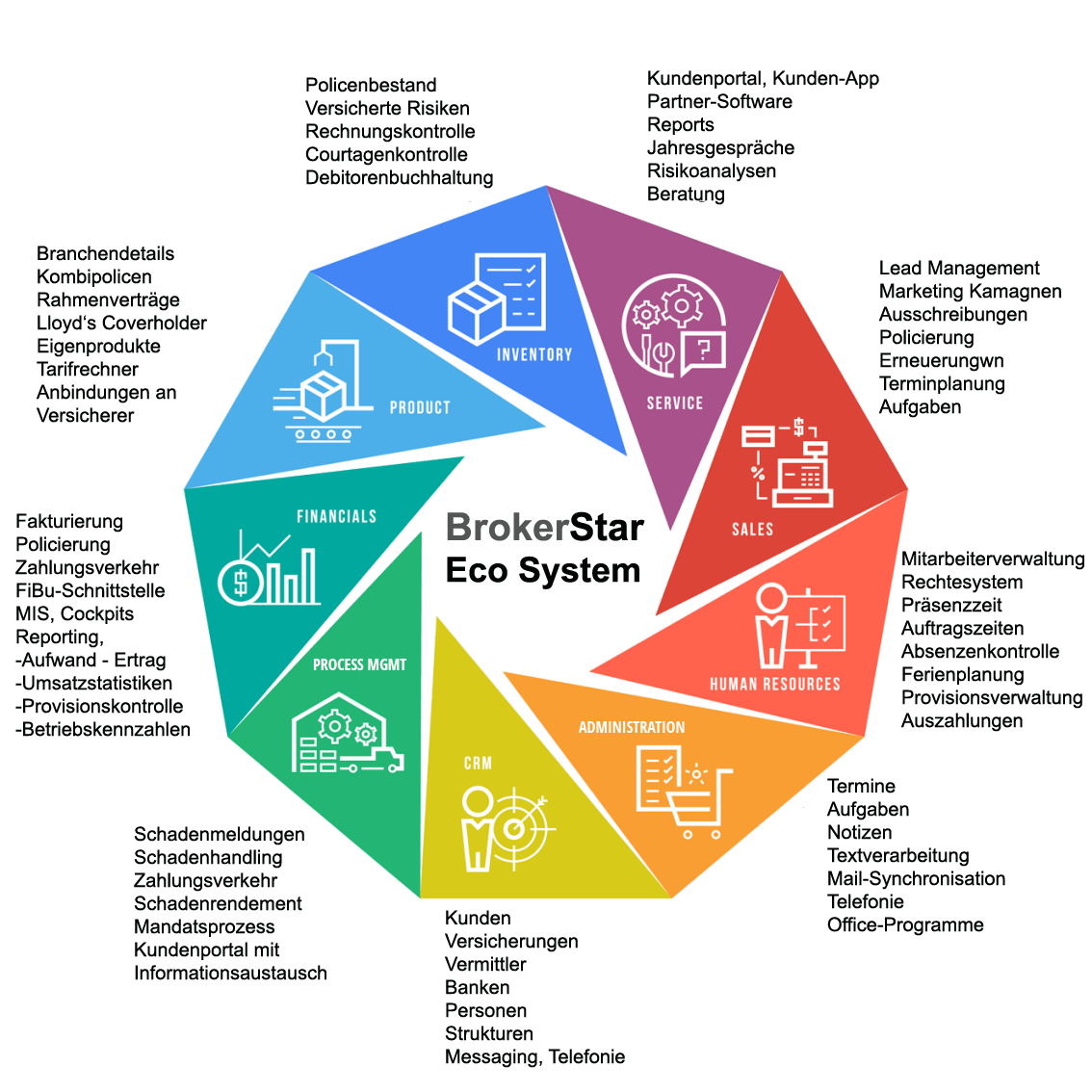
Digital Eco Systems …

Digital ecosystems as the basis for transformation

Dig­i­tal ecosys­tems are a real suc­cess mod­el for most com­pa­nies. They offer the oppor­tu­ni­ty to make prod­ucts and ser­vices acces­si­ble across bor­ders and cul­tures via a cen­tral plat­form. How do dig­i­tal ecosys­tems work and what advan­tages do they offer companies?

Accord­ing to the Fraun­hofer IESE Insti­tute, a dig­i­tal ecosys­tem is a socio-tech­ni­cal sys­tem in which com­pa­nies and peo­ple work togeth­er. Although the par­tic­i­pants are inde­pen­dent of each oth­er, they ben­e­fit from work­ing togeth­er. At the cen­tre of a dig­i­tal ecosys­tem is a dig­i­tal plat­form that enables cooperation.

Fundamental factors for the success of an ecosystem

  • The cus­tomer takes cen­tre stage
    Suc­cess­ful dig­i­tal ecosys­tems are cus­tomer-cen­tric. This means that the ser­vices offered aim to make the cus­tomer jour­ney as pleas­ant as pos­si­ble. Infor­ma­tion is per­son­alised. Larg­er com­pa­nies gen­er­al­ly have a slight advan­tage here because they have more dig­i­tal touchpoints.
  • Data as a deci­sive fac­tor
    In a well-func­tion­ing dig­i­tal ecosys­tem, large amounts of data are avail­able that can be used for analy­sis pur­pos­es. This data pri­mar­i­ly relates to cus­tomers, part­ners and busi­ness process­es. This ben­e­fits an improved cus­tomer journey.
  • High agili­ty
    Dig­i­tal mar­kets are devel­op­ing extreme­ly dynam­i­cal­ly. This makes it all the more impor­tant for com­pa­nies to react agile­ly to changes and flex­i­bly adapt their own dig­i­tal ecosys­tem. Oth­er­wise, there is a risk of los­ing cus­tomers to com­peti­tors. Agile work­ing forms the basis for rapid deci­sion-mak­ing in order to inte­grate new tech­nolo­gies and estab­lish dig­i­tal busi­ness models.

Dig­i­tal ecosys­tems now exist in many indus­tries. The large selec­tion of prod­ucts and ser­vices as well as the ease of use offer high added val­ue. This is the rea­son why suc­cess­ful ecosys­tems are grow­ing rapid­ly. The best-known exam­ple is prob­a­bly Ama­zon with its numer­ous sub­sidiaries and part­ner com­pa­nies. How­ev­er, the estab­lish­ment of a dig­i­tal eco sys­tem also rep­re­sents a prof­itable busi­ness mod­el with high devel­op­ment poten­tial for small and medi­um-sized companies. 

These sys­tems are based on dig­i­tal plat­forms. They com­prise a wide range of ser­vices that are devel­oped in a user-ori­en­tat­ed man­ner based on the data obtained. All stake­hold­ers involved are con­nect­ed via a com­mon plat­form. These offer great ben­e­fits through the inte­gra­tion of var­i­ous ser­vices. The col­lec­tion of user data offers eco­nom­ic ben­e­fits through key fig­ures for the com­pa­ny and the basis for cus­tomer reporting.

The typical phases in the life cycle of a digital ecosystem

There is still no sen­si­ti­sa­tion to the top­ic
The typ­i­cal start­ing point for many small and medi­um-sized com­pa­nies that have not yet dealt with dig­i­tal ecosys­tems is the impe­tus to look at how they work and the advan­tages and disadvantages.

A plan exists
The first thing to check is the fea­si­bil­i­ty of your mod­el. Many com­pa­nies that already have plans for a dig­i­tal ecosys­tem are work­ing with tech­no­log­i­cal or eco­nom­ic assump­tions that have nev­er been scrutinised.

The chances of suc­cess were analysed
The ecosys­tem should be reduced to the absolute­ly nec­es­sary func­tion­al­i­ties. Bring­ing the sys­tem online more quick­ly and thus receiv­ing rapid feed­back from users helps to run through sev­er­al iter­a­tions of the sys­tem in a short space of time and opti­mise the system

The ecosys­tem is live
In this phase, every­thing revolves around bring­ing as many new par­tic­i­pants into the ecosys­tem as pos­si­ble. This con­cerns end users on the one hand and part­ner com­pa­nies on the oth­er. Among end users, ear­ly adopters need to be won over, i.e. peo­ple who use new tech­nolo­gies much ear­li­er than the mass­es and thus act as opin­ion leaders.

The first growth phase is com­plete
Dri­ving growth and func­tion­ing, even if the sys­tem only has a few par­tic­i­pants at first, brings the first net­work effects, such as the acqui­si­tion of new part­ners who have been recruit­ed by exist­ing part­ners. Sim­i­lar­ly, end cus­tomers tell each oth­er about their pos­i­tive expe­ri­ences with their plat­form and thus pub­li­cise the project.

Aim of a digital eco system

The aim must there­fore be to large­ly auto­mate all process­es and there­by ensure the scal­a­bil­i­ty of your dig­i­tal eco sys­tem. The orches­tra­tor or oper­a­tor takes care of day-to-day oper­a­tions. They ensure that the eco sys­tem func­tions as it should and rec­ti­fy any faults prompt­ly. The col­lec­tion and analy­sis of cus­tomer data also falls under this area in order to improve under­stand­ing of cus­tomers and the company’s own users. Part­ners pro­vide cer­tain prod­ucts, ser­vices or tech­nolo­gies with­in the dig­i­tal ecosys­tem that are use­ful for both the plat­form own­er and its customers.

A well-func­tion­ing dig­i­tal ecosys­tem offers you as a com­pa­ny a wide range of oppor­tu­ni­ties. The more part­ners and cus­tomers become part of your dig­i­tal eco sys­tem, the more pos­i­tive net­work effects will result. The prin­ci­ple can be explained using the exam­ple of the tele­phone: With the intro­duc­tion of a sin­gle tele­phone, the device has no ben­e­fit. This only aris­es through the pro­duc­tion of a sec­ond tele­phone. Now two peo­ple can com­mu­ni­cate with each oth­er. The num­ber of pos­i­tive net­work effects increas­es with each addi­tion­al tele­phone. This ben­e­fits users, phone man­u­fac­tur­ers and net­work providers alike.

Sources:
AHD Proact, 2022
What are dig­i­tal ecosystems

Fraun­hofer IESE Insti­tute, 2020
Dig­i­tal ecosys­tems and plat­form economy

IT-Matchmaker.news, 2020
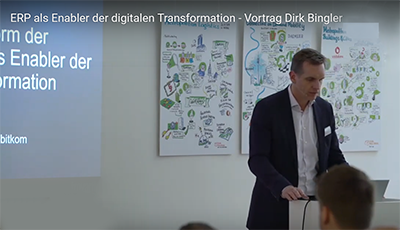
ERP as an enabler of dig­i­tal trans­for­ma­tion, Dirk Bin­gler

EcoHub / IG B2B core processes 03/2024

Eco­Hub AG com­menced oper­a­tions on 8 July 2022. The insur­ance exchange plat­form is now oper­at­ed by a pub­lic lim­it­ed com­pa­ny spun off from IG B2B. In addi­tion to insur­ance com­pa­nies and some large bro­kers WMC IT Solu­tions AG as the only soft­ware man­u­fac­tur­er among the Investors. WMC thus reaf­firms its sup­port for digi­ti­sa­tion efforts in the industry.

Bro­ker­Star by WMC is the bro­ker soft­ware that sup­ports most core process­es and thus empha­sis­es dig­i­tal lead­er­ship. (accord­ing to pub­li­ca­tion IG B2B from 24/03/2022)

Press release IG B2B from 8.7.22

Bro­ker­Star by WMC is the bro­ker soft­ware that sup­ports most core process­es and thus under­lines dig­i­tal lead­er­ship. (Accord­ing to the IG B2B pub­li­ca­tion of 24/03/2022)

     In brief

  • Launch of the Eco­Hub mar­ket­place on 31 March 2022
  • New on Eco­Hub since 1 July 2023: AIG, Groupe Mutuel, Elip­slife, Swiss Life
  • The pre­vi­ous «Giraffe» has been replaced by «Process­es» in EcoHub.
  • The IG B2B core process­es 3.x and 4.x are no longer valid from 1 Jan­u­ary 2024 (read here)
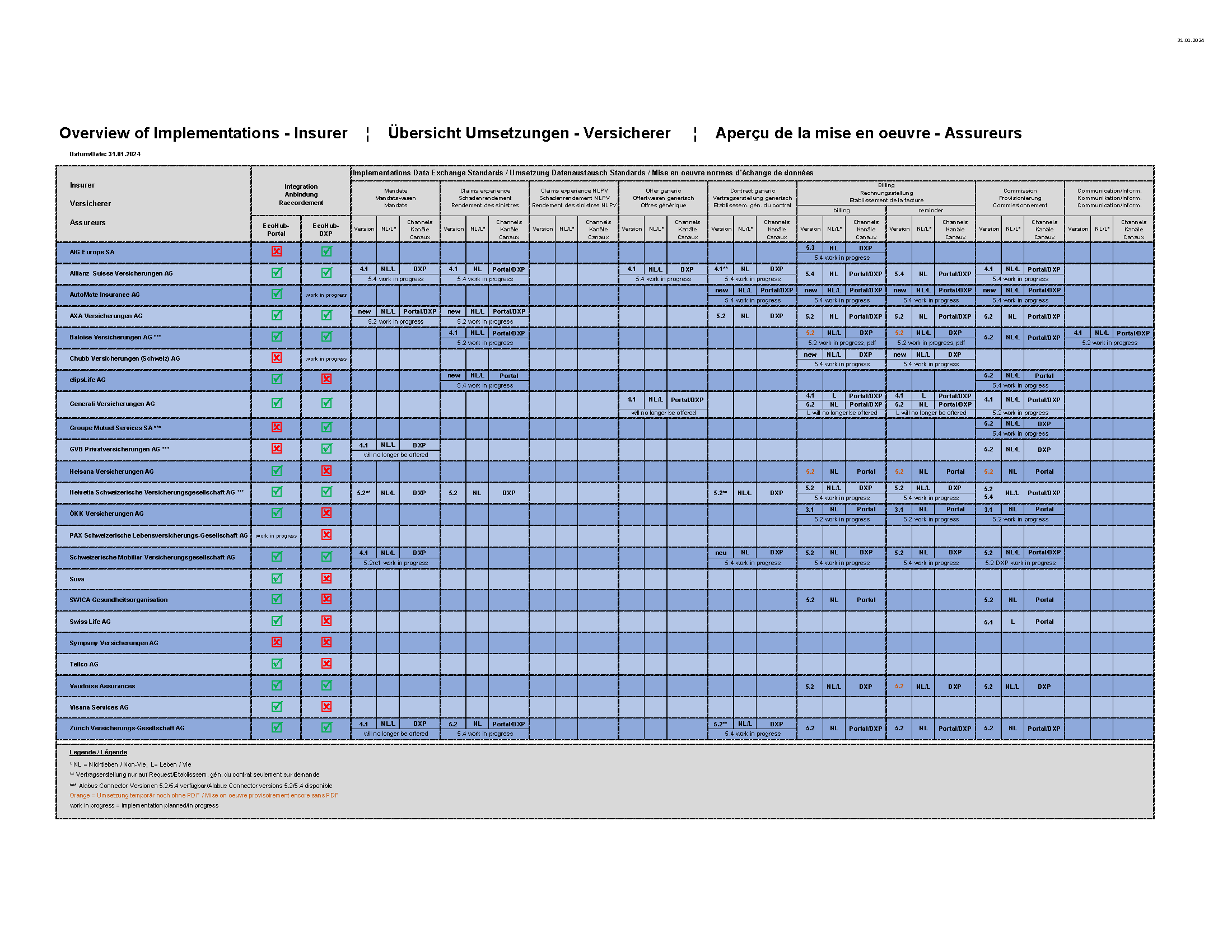
  • Below you will find a list of which insur­ers offer which ser­vices and
    Core process­es sup­port­ed (source IG B2B from 12/12/2022)

Brokerweb V‑3

A Cus­tomer por­tal for busi­ness and private

Send pre­mi­um invoic­es and oth­er doc­u­ments eas­i­ly, elec­tron­i­cal­ly and securely.

Bro­ker­web is a cus­tomer por­tal sim­i­lar to e‑banking. It pro­vides cus­tomers with all the lat­est impor­tant infor­ma­tion at all times, deliv­ers doc­u­ments and offers var­i­ous ser­vices such as enquiries, claims noti­fi­ca­tions and more. In con­trast to e‑mail cor­re­spon­dence, the exchange of data and doc­u­ments is secure and com­plies with cur­rent data pro­tec­tion regulations.

In addi­tion to these tech­ni­cal fea­tures, the indi­vid­u­al­i­ty of the bro­ker and thus cus­tomer loy­al­ty has also been increased. To this end, Bro­ker­Web can be con­fig­ured at var­i­ous lev­els. Rapid con­tact with the respon­si­ble advi­sor is just as impor­tant as sim­ple han­dling for the cus­tomer. Var­i­ous clients can be mapped in Bro­ker­Web by WMC. In addi­tion, dif­fer­ent rights can be assigned to dif­fer­ent peo­ple. With chat func­tion since spring 2024.

The por­tal is respon­sive and can there­fore be used on all end devices such as PC, Mac, tablet or smart­phone. Its ease of use makes it a prac­ti­cal tool for both busi­ness and pri­vate cus­tomers when it comes to insur­ance and bro­ker ser­vices. It is also very impor­tant that the require­ments of the new Data Pro­tec­tion Act (nDSG), which came into force on 1 Sep­tem­ber 2023, are met.

Login: demo-de
Pass­word: demo-de


Sam­ple pages  (click to enlarge)

Fea­tures

Data pro­tec­tion
nDSG require­ments are fulfilled.

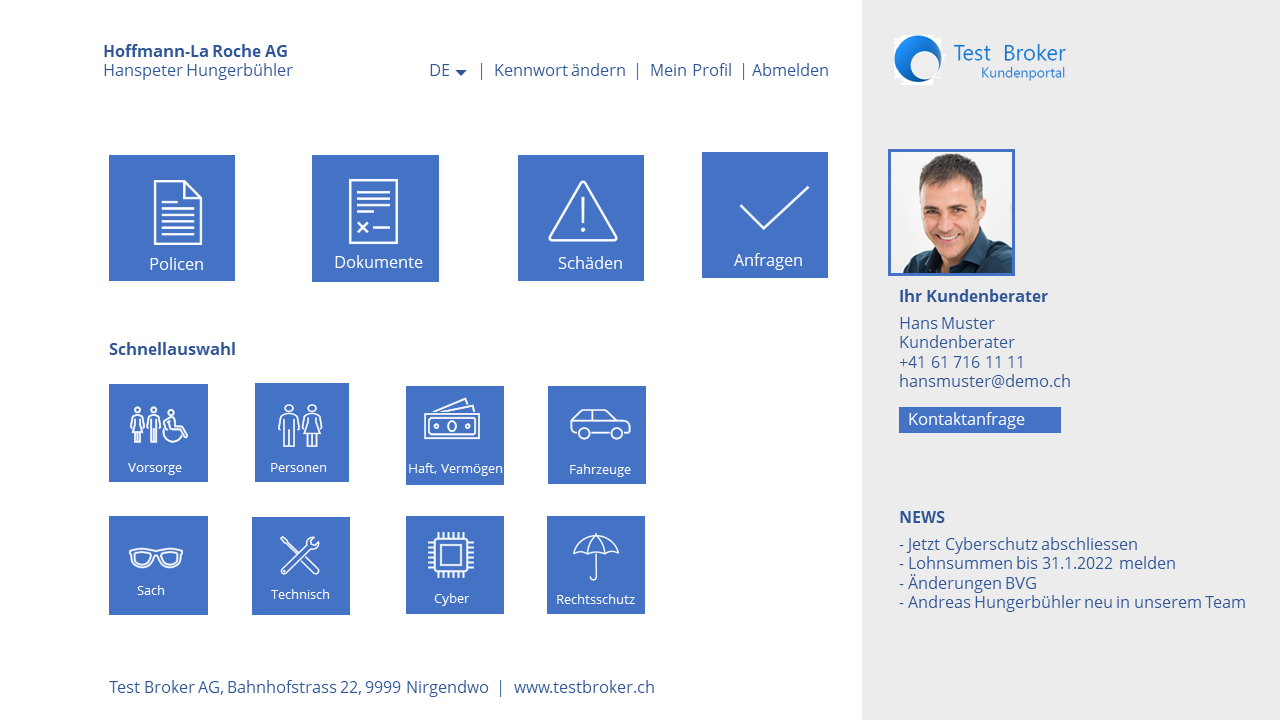
Home page    (Fig­ure 1)
- Main nav­i­ga­tion
- Quick selec­tion con­fig­urable
- Super­vi­sor con­tact details
- Infor­ma­tion from the bro­ker
- User pro­file settings

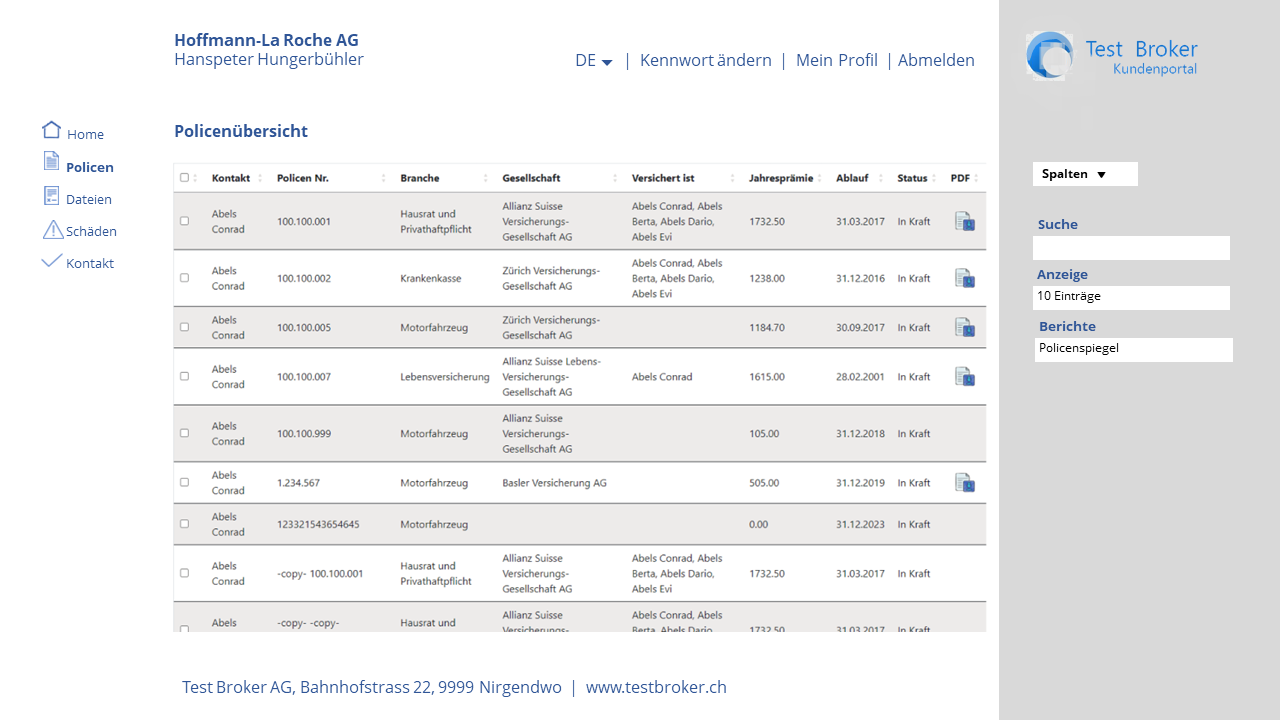
Pol­i­cy overview    (Fig­ure 2)
- Glob­al or by sec­tor
- Search, selec­tions
- Print
- Doc­u­ments
- Jump address to pol­i­cy details
- Jump address to dam­age
- Jump address to fur­ther files

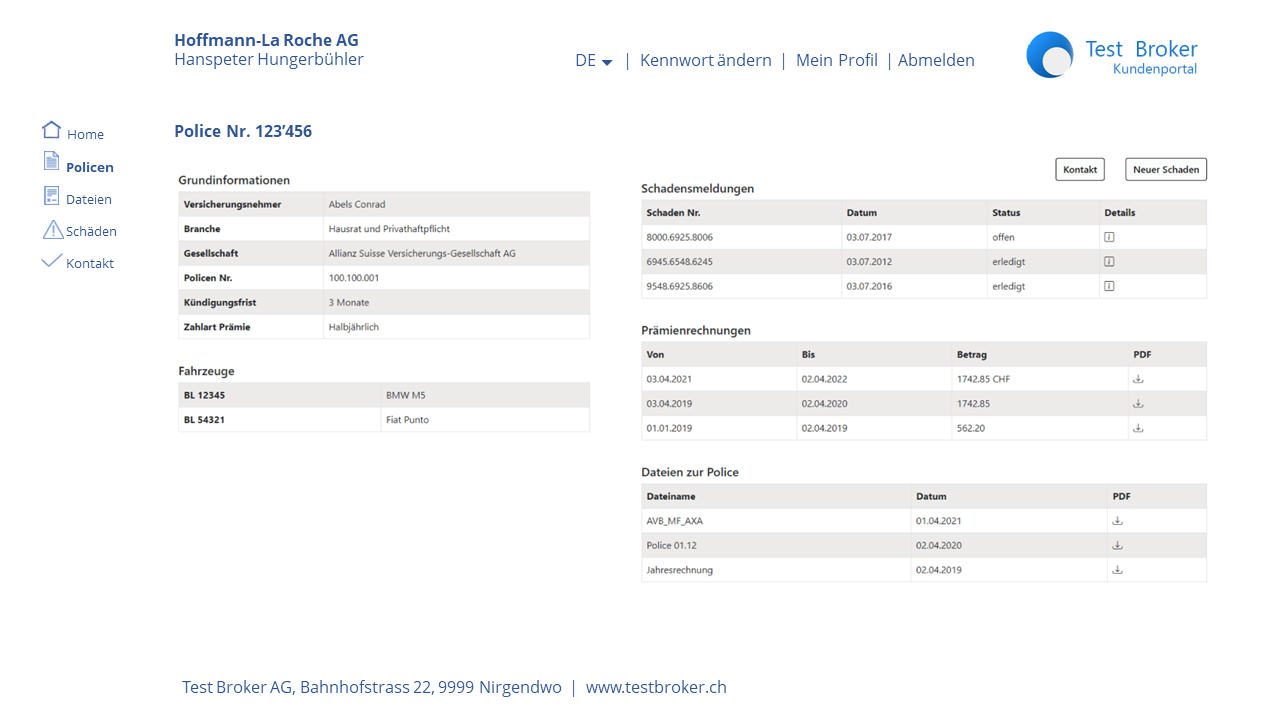
Pol­i­cy details    (Fig­ure 3)
- All infor­ma­tion about the pol­i­cy
- includ­ing doc­u­ments
- Dam­age overview
- Overview of invoic­es
- Overview of doc­u­ments, files

…and many oth­er functions

Making digitalisation work…

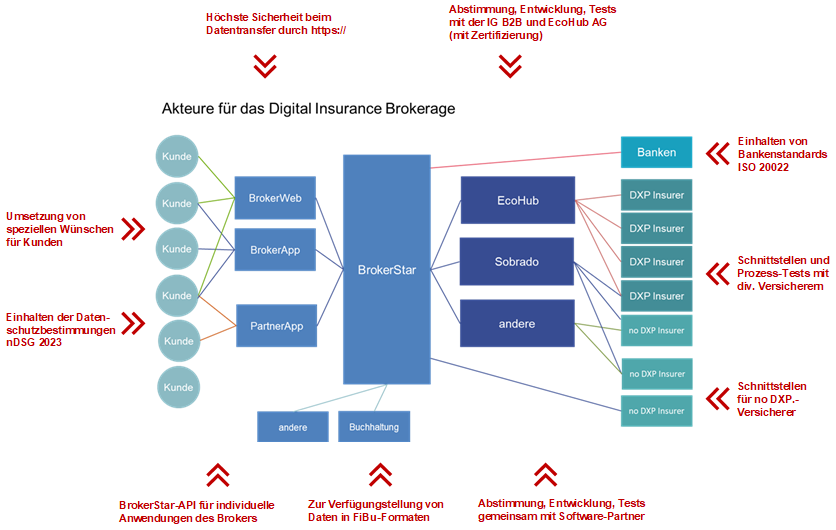
For dig­i­tal­i­sa­tion to work, smooth inter­ac­tion is required of many play­ers such as stan­dard­i­s­a­tion body (IG B2B) plat­form providers (Eco­Hub, Sobra­do), insur­ers, bro­kers, pol­i­cy­hold­ers, banks, soft­ware part­ners (Sobra­do, bro­ker­busi­ness, ch, one Bro­ker, 3C Vor­sorge­por­tal), providers of third-par­ty soft­ware (account­ing pro­grams, tele­pho­ny, messaging).

With a dig­i­tal bro­ker solu­tion, it is not enough to cre­ate a pro­gramme that can only map cus­tomer, pol­i­cy and claims data. It requires coor­di­na­tion and a lot of devel­op­ment work togeth­er with the oth­er play­ers. And final­ly, every­thing has to be thor­ough­ly test­ed. And yet, giv­en the large num­ber of play­ers, there are always cas­es that have not been con­sid­ered or where some­thing has changed at short notice. Dig­i­tal­i­sa­tion is there­fore a dynam­ic process and not the estab­lish­ment of sta­t­ic connections.

rStar by WMC is the bro­ker soft­ware that sup­ports most core process­es and thus under­lines dig­i­tal lead­er­ship. (Accord­ing to the IG B2B pub­li­ca­tion of 24/03/2022)

WMC is tak­ing on a pio­neer­ing role here, with inten­sive col­lab­o­ra­tion with oth­er play­ers play­ing a major role in the over­all devel­op­ments. The prox­im­i­ty to these part­ners is a com­mit­ment to cre­at­ing seam­less process­es for the broker.

Dig­i­tal Insur­ance Bro­ker­age
by Bro­ker­Star

Bro­ker­Star offers end-to-end dig­i­tal­i­sa­tion
across pro­grammes and organ­i­sa­tions in order to
work of the future to all those involved.

Bro­ker­Star takes applic­a­ble stan­dards into account
as well as mar­ket con­di­tions and cus­tomer requirements.